
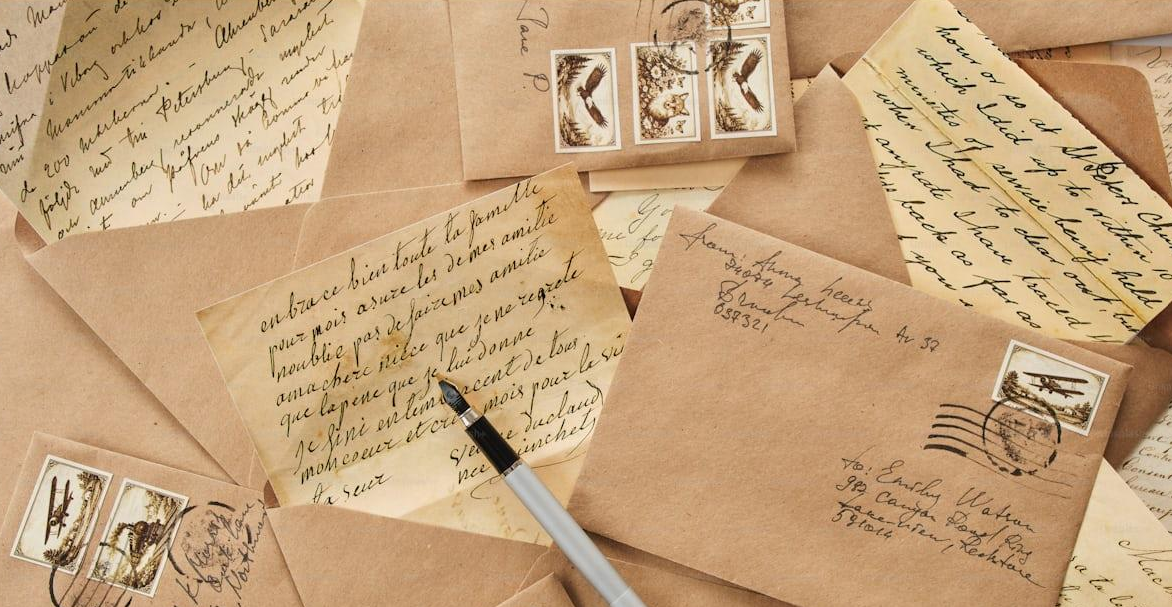
In an age of instant messages and endless notifications, a new generation is rediscovering the simple pleasure of sending—and receiving—a letter.
When was the last time you opened your mailbox and found something you actually wanted to read?
Not a bill. Not an advertisement. Not another reminder.
A letter.
An envelope addressed to you, perhaps decorated with stickers or handwritten flourishes, with a postage stamp carefully placed in the upper-right corner.
Something that someone took the time to write, fold, seal, stamp, and send.
For a growing number of young people, that experience is becoming something worth rediscovering.
An Old Tradition Finds a New Generation
In an October 2026 article titled “You've Got Mail — and a New Friend,” The New York Times explored the resurgence of pen-pal relationships among young adults.
The article describes how social media platforms, particularly TikTok, are helping people find new friends with whom to exchange handwritten letters.
One content creator, Em-J Staples, launched a summer pen-pal matchmaking initiative that attracted more than 330,000 views and 14,000 sign-ups.
Other young adults described exchanging letters every few weeks, sharing everything from everyday experiences to deeply personal thoughts.
Some have never met their pen pals in person.
And that's part of the appeal.
In a world where communication is often immediate, public, and fleeting, handwritten correspondence offers something different.
Time to think. Space to express. The anticipation of waiting for a reply.
The Beauty of Slowing Down
Consider how we communicate today.
An email can be written and delivered in seconds. A text message might receive an answer almost immediately. Social media allows us to share our lives with hundreds—or thousands—of people at once.
But handwritten letters ask something different of us.
They ask us to slow down.
To choose our words. To put pen to paper. To make the effort to connect with one person rather than broadcast to many.
And unlike a message that disappears into a digital conversation, a letter can be held, reread, saved, and treasured for years.
The New York Times article suggests that this revival isn't necessarily about rejecting technology. In fact, many of these new friendships begin online.
It's about finding a more personal way to connect.
Technology introduces the pen pals.
The postal system brings their friendship to life.
And Then There's the Postage Stamp
Every letter has a journey.
And for generations, the postage stamp has been both a practical necessity and a small piece of that story.
A stamp can reflect the sender's personality, interests, or values.
Perhaps it's a favorite animal. A beloved artist. A historic event. A beautiful flower. Or a person whose accomplishments deserve recognition.
For someone receiving a letter, the stamp becomes part of the experience.
Before the envelope is opened, it has already communicated something.
That's one of the remarkable things about postage stamps.
They serve a purpose, but they also carry art, history, culture, and identity into everyday life.
A stamp may travel hundreds or thousands of miles, passing through many hands before reaching its destination.
And when it arrives, it becomes part of a personal connection between two people.
More Than a Way to Deliver the Mail
At The Tiny But Mighty Postage Stamp, we're exploring the stories behind these miniature works of art and the people who bring them to life.
Our documentary examines how postage stamps reflect American history, culture, creativity, and the values we choose to commemorate.
But the resurgence of pen pals reminds us of another dimension of their importance.
Stamps aren't just about what we remember. They're also part of how we connect.
A handwritten letter is an intentional act.
Someone thought about you. Chose to write. Selected an envelope and a stamp. And sent a little piece of their world into yours.
The postage stamp helps carry that connection.
And perhaps that's one reason this renewed interest in handwritten correspondence feels so meaningful.
In an increasingly digital world, people are rediscovering the value of something they can actually hold.
What Would We Lose?
One of the questions at the heart of our documentary is simple:
What would we lose if postage stamps disappeared?
The mail might still reach its destination.
But would something else disappear along the way?
The art. The history. The personal expression. The little moment of discovery when a beautiful or unexpected stamp catches your eye.
The resurgence of pen pals suggests that even in a world of instant communication, there's still something special about the journey of a letter.
And perhaps the postage stamp deserves a little more appreciation for being part of that journey.
Because sometimes, the smallest things help create the most meaningful connections.
Inspired by Maria Santa Poggi's October 3, 2026, New York Times article, “You've Got Mail — and a New Friend.”
Read the original article: https://www.nytimes.com/2026/10/03/style/em-j-staples-tiktok-matchmaker-pen-pals.html
The Tiny But Mighty Postage Stamp is an independent documentary exploring the art, history, and cultural significance of U.S. postage stamps. Follow our journey as we uncover the extraordinary stories behind these tiny works of art.