
How the Muhammad Ali Stamp Was Designed: Preserving Legacy Through USPS Stamp Art
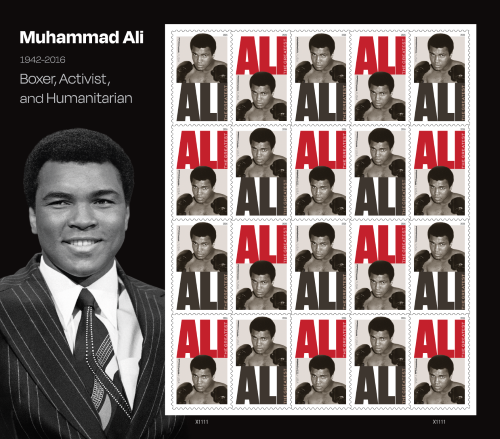
The 2024 Muhammad Ali Forever Stamp designed by Antonio Alcalá for the United States Postal Service. Image courtesy of the United States Postal Service.
The new Muhammad Ali USPS stamp designed by Antonio Alcalá, a longtime Art Director and designer for the U.S. Postal Service, was recently featured in an NPR interview discussing the creative process behind the stamp and the hundreds of images considered before finalizing the design. Alcalá explains how the imagery was chosen to reflect Ali’s iconic presence and cultural impact. The stamp was issued on January 15, 2026, as part of a ceremony in Louisville, KY, with millions of stamps printed for nationwide use.
“When you’re picking an image that’s hopefully iconic and representative… you start big and then slowly narrow it down until you find the one piece you think will work best.” — Antonio Alcalá, USPS Art Director on the Ali stamp design process.
When the U.S. Postal Service unveiled its commemorative Muhammad Ali stamp on January 15, 2026, the release drew national attention not just for its subject, boxing’s greatest icon, but for the thoughtful design choices behind it. In a recent NPR All Things Considered interview, USPS art director Antonio Alcalá walked listeners through what it took to create a stamp worthy of a figure as layered and legendary as Ali.
The stamp features a striking portrait of Ali in a classic boxer’s pose, gloves raised and eyes staring directly at the viewer, a design intended to evoke the energy and presence that defined Muhammad Ali at the height of his career. Alcalá explained that while countless photos of Ali exist, few capture both his athletic prowess and magnetic personality in a way that could be distilled effectively into postage-stamp size.
“There are many images of Muhammad Ali, but you want something iconic; something that communicates who he was at his peak,” Alcalá said. “That direct eye contact, the stance, it all communicates how he came to be known.”
Alcalá’s remarks also give readers a rare look at the design process itself, which must navigate the unique challenge of working within the Postal Service’s famously small canvas. As he told NPR, designing for a tiny stamp requires artists including him to continually view the artwork at actual stamp size early and often. This ensures every line and detail remains clear and expressive when reduced, a constraint that takes adjustment even for seasoned designers.
Beyond the aesthetics, Alcalá touched on the broader responsibility of representing an American icon accurately and meaningfully. For USPS, the stamp isn’t just a functional tool, it’s a tiny public artifact that will travel in mailboxes across the country, quietly carrying Ali’s legacy into everyday life.
This interview offers a rare peek behind the scenes of a design process that most people never see — one where art, history, and cultural memory converge on a 1.5-inch canvas. In Alcalá’s hands, the Muhammad Ali stamp becomes more than a celebration of athletic achievement; it stands as a testament to the power of image, memory, and design in telling American stories.